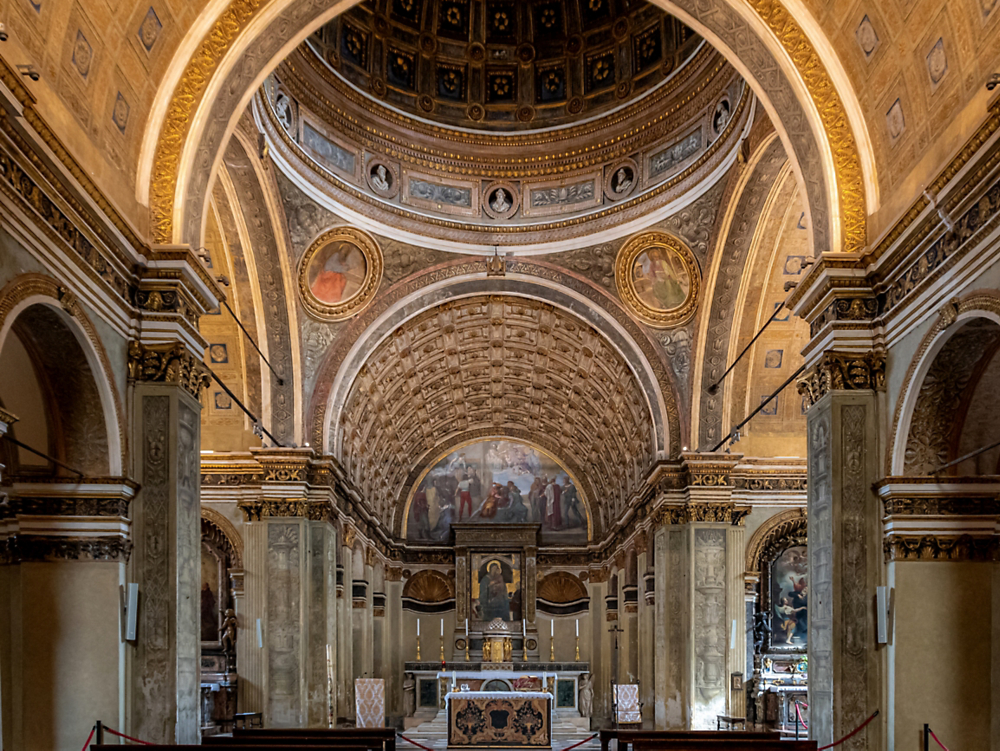
The exterior of Milan’s Santa Maria presso San Satiro certainly doesn’t look large enough for a deep apse typical of its era—but an artist had a remarkable idea. See what’s inside during Northern Italy: The Alps, Dolomites & Lombardy.
Refer Friends & Earn Cash Rewards—Up to a FREE Trip.
The exterior of Milan’s Santa Maria presso San Satiro certainly doesn’t look large enough for a deep apse typical of its era—but an artist had a remarkable idea. See what’s inside during Northern Italy: The Alps, Dolomites & Lombardy.
Chances are, you don’t need an insider’s recommendation to seek out the beauty of Notre Dame, La Sagrada Famiglia, or similarly celebrated architectural achievements. But many simple facades belie the treasures contained within. Below, discover five hidden gems that reward travelers who dig deeper.
Architects often get creative when faced with space constraints, such as building up instead of out, or carving structures directly into the surrounding landscape. Sometimes, however, the solution isn’t “construction” at all.
Commissioned to build a church to house a venerated fresco of Mary and Jesus, the architect Donato Bramante had just three feet to work with behind the altar—scarcely enough to accommodate the deep apse typically found in churches at the time. In one of the world’s greatest trompe l’oeil masterpieces, Bramante manipulated perspective to create the illusion of nearly 30 feet of depth. For more than 500 years since its construction in 1478, visitors have fallen for this trick of the eye, often not even realizing until someone points it out.
See whether your own eyes deceive you at Santa Maria presso San Satiro, located right near Milan’s Duomo, in your free time during Northern Italy: The Alps, Dolomites & Lombardy.
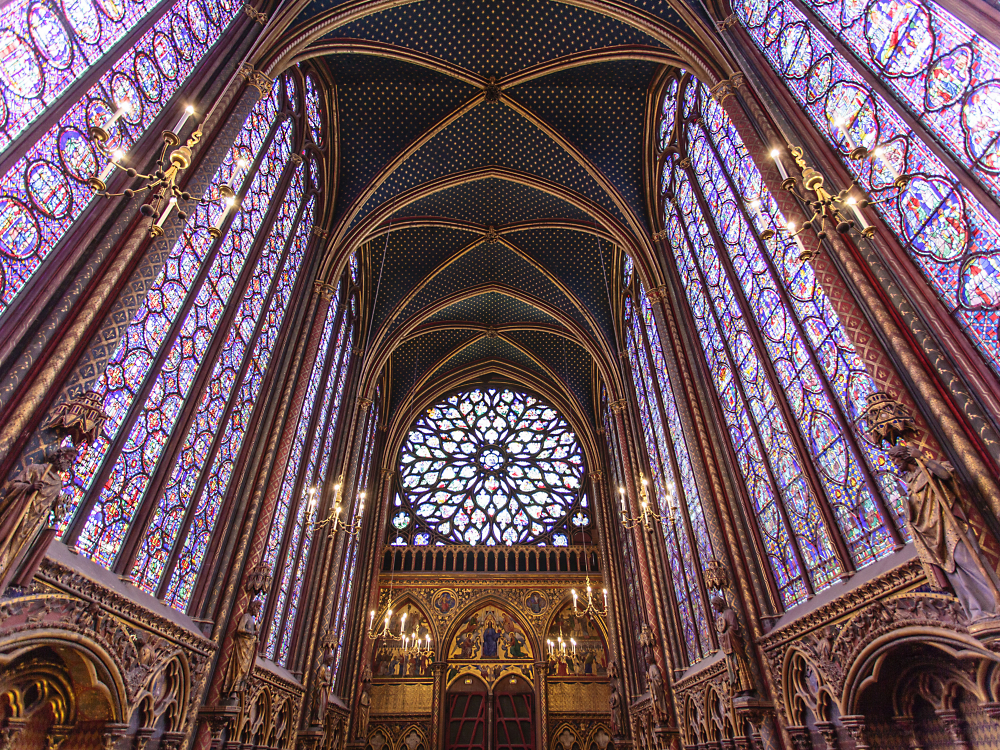
Built in the 13th century to house relics including the Crown of Thorns, Sainte-Chapelle stands less than 120 feet tall, just one structure within a medieval palace complex on Ile de la Cité. While the Gothic façade in itself is more beautiful than others on this list, its architects were intentionally restrained: The purpose of Sainte Chapelle was never to impress from the outside, but to serve as a fittingly grand treasure chest for the relics within.
The upper chapel contains 15 towering stained-glass windows depicting more than a thousand biblical scenes. Because its engineers opted for slender support beams instead of stone walls, glass covers two-thirds of the surface, causing the walls to seemingly disappear when sunlight streams in. The famous “rose of the Apocalypse” was added in the 15th century, portraying the Book of Revelation in Flamboyant Gothic style. As the light changes throughout the day, the colors and patterns shift like the interior of a giant kaleidoscope.
Marvel at the otherworldly light of Sainte Chapelle in your free time in Paris during Grand Circle’s The Seine: Paris & the Heart of Normandy River Cruise.
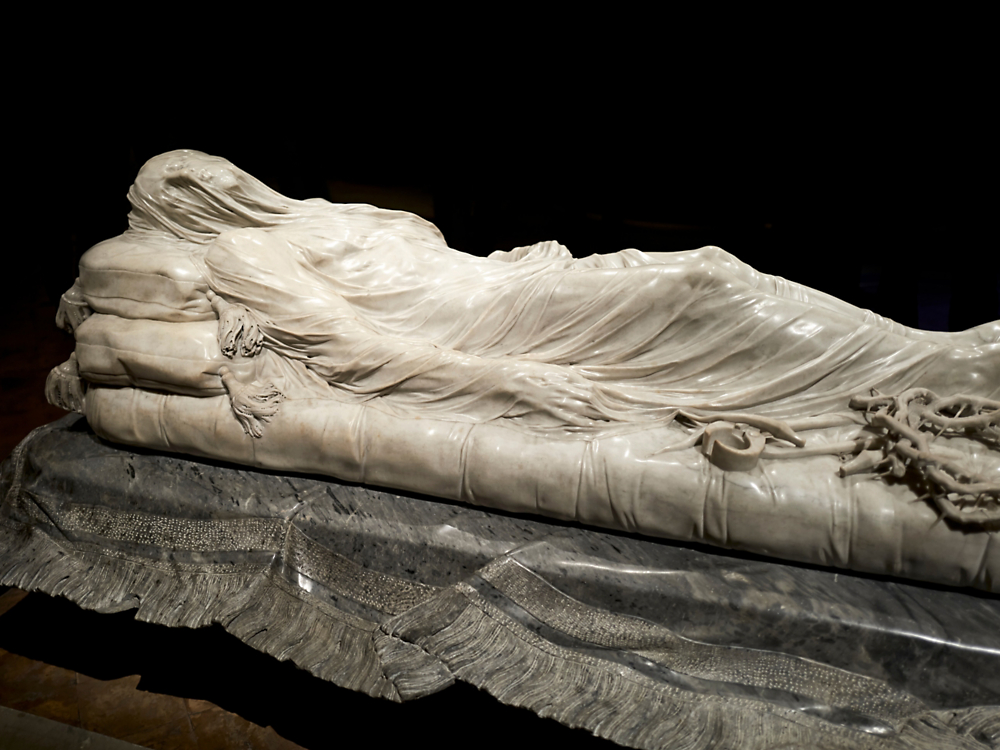
Tucked away on a narrow street within the historic center of Naples, Sansevero literally hides its treasures in plain sight. Its patron, Raimondo di Sangro, was an eccentric known for secretive experimentations—so when the chapel’s most famous sculpture appeared to defy the laws of physics, it sparked legends of magic and alchemy.
TheVeiled Christ was, in fact, painstakingly carved from a single block of marble by Giuseppe Sanmartino in 1753. Celebrated as one of history’s greatest marble carvings, the veil clings and gathers around Christ’s face and body, creating an illusion of both weightlessness and gravity. While theVeiled Christ deservingly gets the most attention, the chapel contains other notable sculptures, including theVeiled Truth and Release from Deception. A curious display known as the “Anatomical Machines,” created from preserved human remains, hints at the mystique surrounding the chapel’s patron.
Explore Sansevero in your free time in Naples during O.A.T.’s New! Amalfi Coast: Naples, Sorrento & Pompeii adventure.
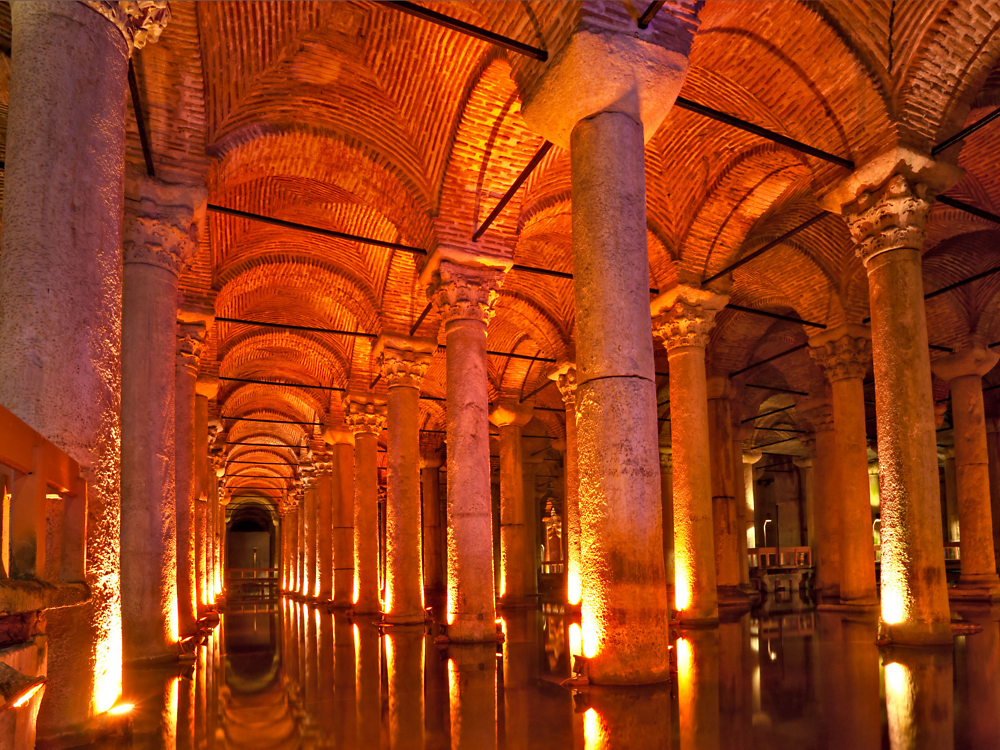
Sometimes impressive discoveries are hidden beneath our feet. Built in the sixth century by Byzantine Emperor Justinian I, the Basilica Cistern was one of many underground reservoirs that fed Constantinople. Though it served a practical purpose, its 336 columns and other architectural elements were recycled from older Roman sites, creating the impression of a vast subterranean palace.
The cistern fell into disuse following the Ottoman conquest of Constantinople. Then, in the 16th century, a French scholar rediscovered it upon investigating stories of locals drawing water and catching fish from holes in their houses. When it was finally reimagined as an attraction in the 1980s, the massive conservation project removed around 50,000 tons of mud and silt, installed wooden walkways, and added colored lighting. Today, walking down the staircase and emerging into the forest of columns, reflected by the water and bathed in shifting hues of light, feels like entering a secret world.
Descend into the Basilica Cistern in your independent explorations of the Hagia Sofia neighborhood during Turkey’s Magical Hideaways.
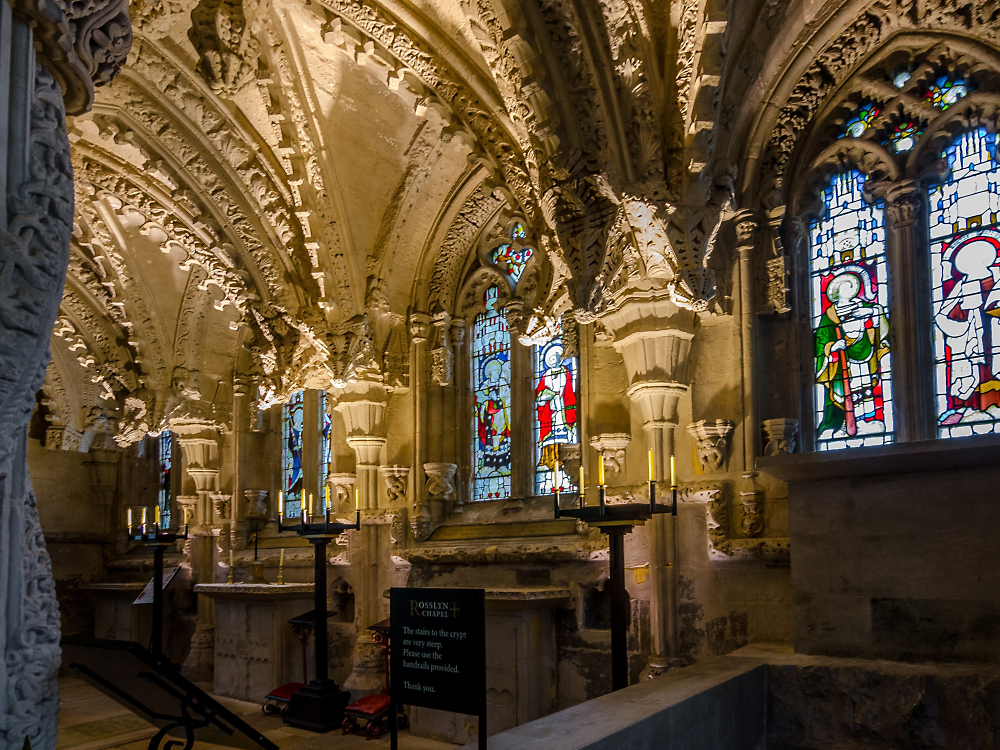
On a rocky plateau in Midlothian, Scotland, near Edinburgh, is the Rosslyn Chapel. Built in the 15th century, it was initially founded by William Sinclair as a much larger Roman Catholic church—but it was never finished. It nevertheless ranks as one of Scotland’s most famous buildings because of the carvings that cover nearly every surface inside.
Most famous is the "Apprentice Pillar" or ’Prentice Pillar. Located in the southeast corner of the chapel, this column of stone is ornately decorated with vines that climb up its trunk in a helix pattern. A profusion of plants bursts from the top, while eight dragons encircle the base. It inspired a legend in which an apprentice surpassed the skill of his master carver, prompting the master to murder him in a jealous rage.
Rosslyn is also beloved for its enduring mysteries, including a collection of more than 100 “Green Men”—foliage-covered figures that evoke Pagan rather than Christian symbolism. Perhaps the intrigue of the unknown inspired its appearance in the 2006 film adaptation of The Da Vinci Code.
Visit Rosslyn Chapel on an included tour during Idyllic Great Britain: England’s Lake District, the Scottish Highlands & Orkney Archipelago.
During Northern Italy: The Alps, Dolomites & Lombardy, contrast the façade of Milan’s elaborate Duomo with the understated masterpiece hidden within Santa Maria presso San Satiro.
Soaking It All In: Bathing Traditions Around the World
Across the world, bathing rituals offer a shared tradition of relaxation and renewal.
Glad to Gather
The U.S. isn’t the only country with a major national celebration in the month of July.
“My Client Isn’t in a Hurry”: A Milestone for Gaudí’s Masterpiece
A century after Gaudí’s, the Sagrada Familia’s central tower is complete.
Get The Inside Scoop On...
Like what you see here? Receive weekly updates right in your inbox.
inside-scoopArticles In This Edition